

Toska
Everything Was Forever, Until It Was No More.

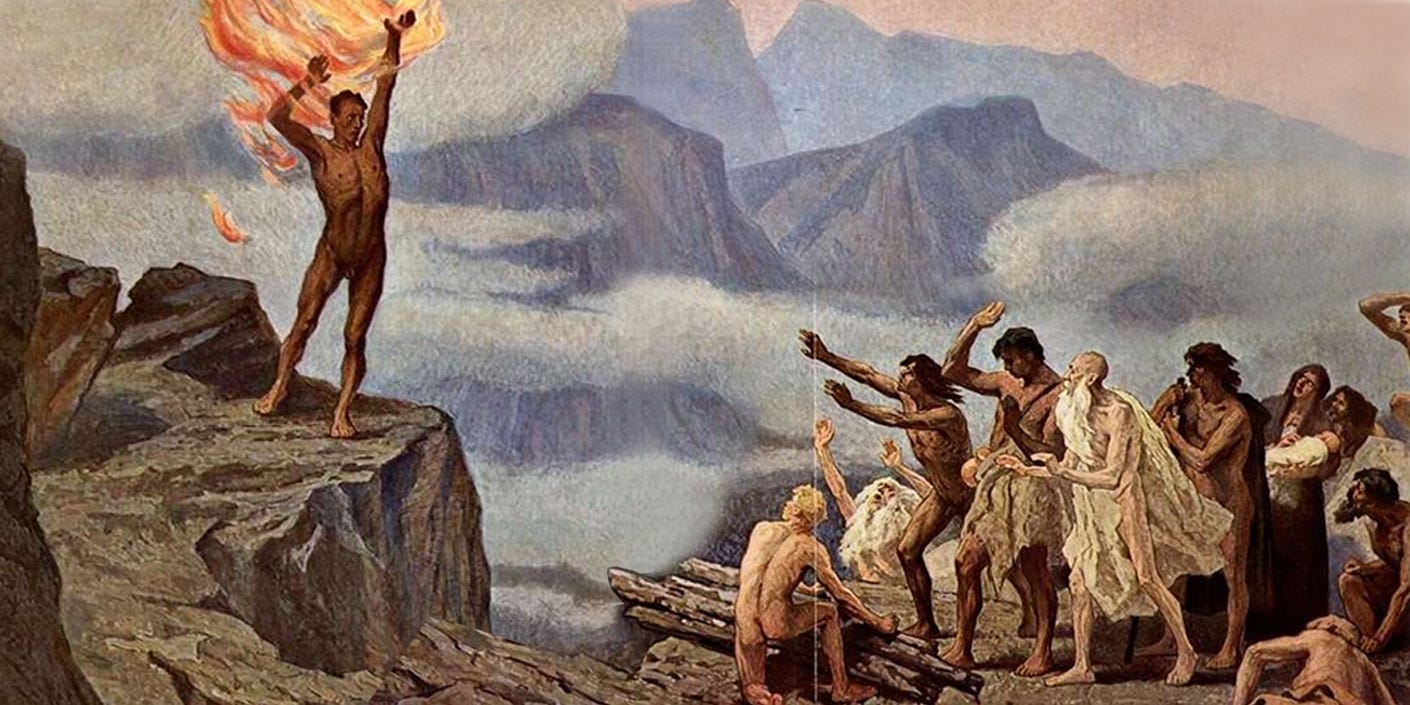
Everything was forever, until it was no more.
The Russian word “toska” does not have an English equivalent.
Vladimir Nabokov attempted to translate its meaning across this linguistic and ontological ravine, writing, “Toska is deepest and most painful, it is a sensation of great spiritual anguish, often without any specific cause. At less morbid levels it is a dull ache of the soul, a longing with nothing to long for, a sick pining, a vague restlessness, mental throes, yearning.”
The word “toska” is beautiful, serving as a kind of elegant, nuanced etymological time capsule from the same part of the world that also gave us the word “shaman”. But, unlike the word and culture that approximates its meaning, the living, breathing day-to-day lived experience of toska is not beautiful, elegant, or in any way desirable.
Sure, there are the standard spiritual upgrades that come along with any prolonged trauma, life crisis or shamanic illness: existential and ontological insights, spiritual lessons learned, the addition of new psychic gifts, and incredible levels of personal discovery and self-awareness.
But toska also does not, by it’s very nature, allow for the sweet relief of disassociation, or for the mercy of the palliative effects of load-bearing delusions. There is no therapist or genius medical doctor that can offer any insights or treatments that will free you from its bondage. And, perhaps most upsetting, there is no writer or mystic that can offer any poetic transcendence from its grip.
Said another way? There is no avoiding the suck.
The ache is too deep for that, too persistent. It comes on again, savage and alive, every day. And the afflicted are forced to stare at their own fresh, gaping wound with the knowledge that they are impotent to heal it. They only have the belief that, one day, what feels like forever will simply be no more.
The secret nature of toska, and its antidote, lies only within is the realm of shamanism and its gods: wounded deities driven mad, having lost their eyes or limbs or memory of themselves, forced into exile, wandering the borderlands between the sacred and the profane.
These gods are the “wounded healers” depicted in the Hanged Man of the Tarot: gods that are not allowed to die, not allowed to live, perpetually forced into a state of surrender, suffering, and sacrifice that keeps them stuck between stations, upside down, betrayed and bleeding until they are resurrected, ultimately transcending death.
If, like me, you have been in an extended cycle of toska— perhaps even with recent visits from shamanic gods like Odin, Jesus, and Prometheus— I expect you’ve noticed it hitting a crescendo in recent months, culminating in an almost intolerable tonal pitch in the last few weeks and days. Negative entity attacks have become so overt their nature is undeniable, even to the most skeptical and logical among us. In fact, our spiritual adversaries are revealing their hand (and their true nature and identity) in unprecedented accounts of documented diabolical confusion, constriction, and inexplicable “bad luck” in nearly every area of daily life, seemingly all at once.
Even the tacit faith in our shared social structure, as with the efficacy of elections or reliance on basic infrastructure and systems of commerce, seems to be evaporating at an astonishing rate, revealing not just decoherence in social media, politics or news, but in our own human-scaled lives.
Everyone is starting to talk about how hard and how weird life at the moment is, seemingly particularly so for the truth-telling, ethical and legitimate psychic practitioners we all know in our lives. All evidence suggests that these folks seem to be objects of a relentless demoralization campaign: sudden illness, acute financial compression, loss of employment, inability to find a job or get a leg up in their own business, expert-level internet fraud and impersonation, death, loss and grief for loved ones, and unexplainable difficulties with even the simplest daily mechanisms of modern life.
And that’s not an accident. It just can’t be.
So, what’s all this toska all about? Why would benevolent spiritual beings allow (or desire) us to suffer like this if they are in fact both real and good?
Well, shamanism gives us the answer.
You see, we need to individually and collectively hit peak toska, stare it down and not give up— even when it feels and looks like we’re losing everything and it doesn’t feel like we have the strength to proceed— before the real shift can take place, made possible by the destabilizing, high-stakes shamanic phenomenon of liminality.
It has to feel permanent before we can see— and appreciate— when, where, why and how it ends, not to mention take stock of what we’ve learned and what we’ll all do differently moving forward.
It has to feel like forever, and we have to surrender to that with our heads held high in spite of the pain, in order for it to not actually be forever.
It’s only in this last week that I understand the presence of my strange spirit guide Prometheus, bookended by visits, gifts and clues from both Jesus and Odin. Today, writing this, I see clearly what Prometheus’ shamanic gifts, including toska, have given me.
And, as I re-read the lines from the play Prometheus Bound— the very first tragedy ever written featuring the first-ever antihero ever documented— I have new levels of awareness and appreciation for him as a spirit guide. You see: like both Jesus and Odin and other shamanic gods, Prometheus had two things working for him despite being chained to the side of a mountain, having his liver eaten out by Zeus’ eagle every single day for 10,000 human years, and mocked by assholes as he remained helpless in bondage all along the way:
Prometheus knew that he could not be killed, even by Zeus; and
He could see the future, and literally knew how and when his suffering would end
With these two shamanic gifts, all that was left for him to do was endure it: remain stubborn and steadfast in spite of the incredible suffering, trusting in the knowledge that he saw the future— and understood how the story would actually, eventually end.
Everything was forever until it was no more.
Said another way? Until physical, final death, all failure is psychological.
I am personally in a very, very difficult situation in my life, and while I know the how and the why— and even understand that I am far from alone in my suffering— I find myself revisiting this truism, reminding myself of the fits and starts in psychic sight that have enabled me to get glimpses of my inevitable release from bondage.
Like Prometheus, all I have to do is endure it— and remember the prophecy.
But, if I’m being completely honest, this does not mean it isn’t affecting me.
It is, and as Prometheus said in Prometheus Bound: “It is painful to speak. It is painful not to. Every way, there is misery.”
So, despite being in the midst of several business critical efforts like promoting my new book, needing to stay busy in my shamanic practice to keep my business and my life afloat, as well as communicate with my followers and subscribers, I am making a (hopefully) temporary tactical retreat from non-essential labor and communication.
It’s been a difficult impulse to resist, but with my ongoing illness (which is pretty ghoulish, even this far into recovery), the protracted and very expensive litigation against those that caused this illness (as well as my husband’s and my dog’s illnesses, not to mention the disposal of all of our former belongings due to toxic contamination), and the ongoing spiritual battles unfolding in the margins of what is publicly perceivable, I’m past the point of exhaustion.
The center, as it were, cannot hold. The falcon cannot hear the falconer. And I cannot carry the burden of social sense-making alongside my own toska— at least not right now.
Things on planet earth are about to get very, very weird. Toska will visit you, your homes and your loved ones and communities, too.
So, I hope you remember what I’ve written above and come back to read it when you need it, too. Outside of that, all else I can offer is that I think we’ve been living in a false construct of the natural order since before prehistory. The labor pains and high-stakes liminality and decoherence, while hard, are also signs that something new is about to be born.
And, perhaps, the paradigm of Eden that never really was may just come to be. But we need to stay strong and true, focused, resolute, and not try to tap out of the suck. In this game of chicken, we cannot blink. We must stare the enemy in the face and, while we may suffer and feel fear and want desperately for it to end, this is the precise moment in which we must, at all costs, resist the urge to quit.
Besides: the way out may be hard, but it’s also rather simple:
“Do you want to see what human eyes have never seen? Look at the moon.
Do you want to hear what ears have never heard? Listen to the bird’s cry.
Do you want to touch what hands have never touched? Touch the earth.
Verily I say that God is about to create the world.” - Borges
-Rachel
Thankful you for your writing, thoughts, sharing spiritual insights, and most importantly being a great example of stepping back into self care and releasing what doesn't serve and temporarily pausing social contacts while riding out physical and psychic storms.
This is so timely. I’ve been in some iteration of toska (didn’t know the word for it until now!) since my early 20s, and as the world gets increasingly weird and, well, just bad, I can’t help but feel there’s something more coming (the bad and then, eventually, the good). It all feels exactly as you say— just enduring, knowing it won’t last forever. And, for whatever it’s worth, I am sorry this very hard time in your life has been an extended experience.